How to Spot a Historical Fake Online: A Checklist for Viral Images and Quotes
October 30, 2026 - History
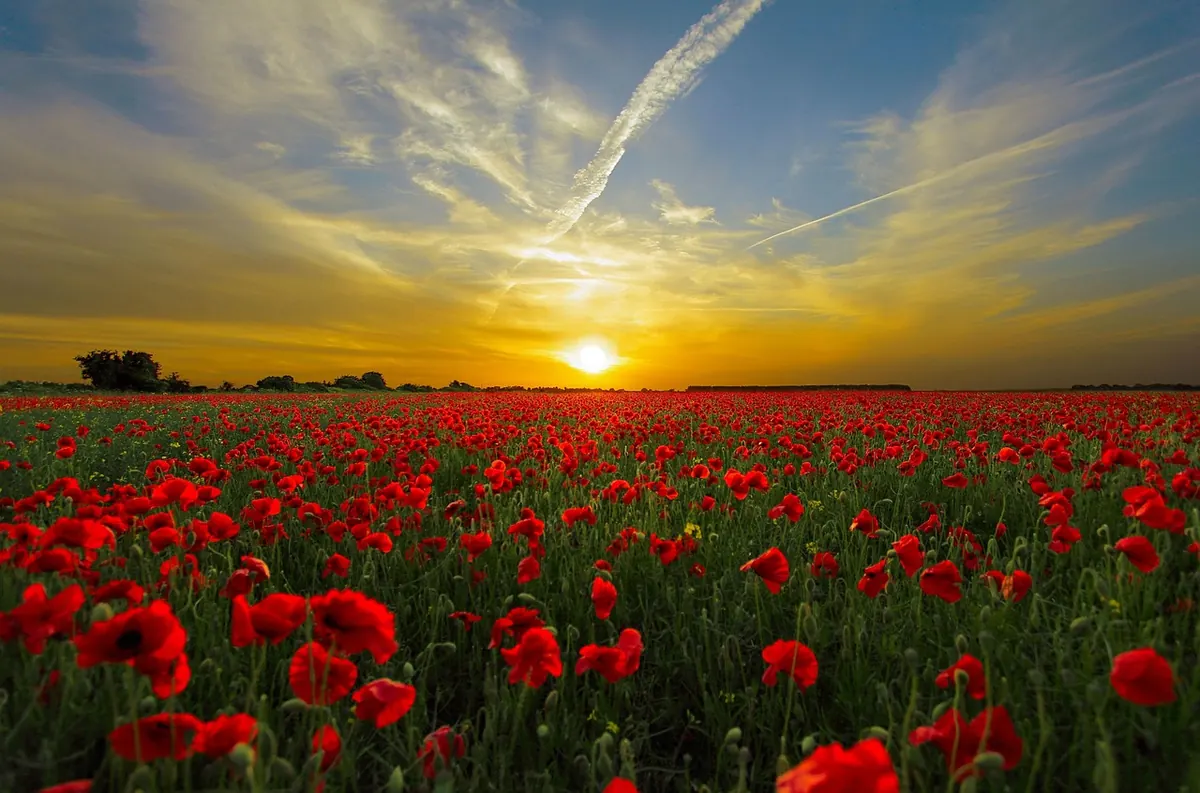
Twice a year, day and night come out roughly even. Twice a year, one of them wins outright — the longest day, then the longest night. Most of us learned the four words in school and quietly filed them away as synonyms for "start of spring" and "start of summer." They are not synonyms, and the difference between them explains a surprising amount of what you see out the window: how fast the evenings lengthen in March, why the solstice feels like the middle of summer rather than its beginning, and why the earliest sunset of the year never falls on the shortest day.
An equinox is the moment the Sun sits directly above Earth's equator. On those two days, the planet is lit from pole to pole in the same way a ball is lit by a lamp held at eye level: the terminator — the line between day and night — runs almost straight from the North Pole to the South Pole. Every place on Earth gets roughly twelve hours of light and twelve of dark. The word comes from Latin for "equal night."
A solstice is the opposite arrangement. The Sun reaches its farthest point north or south of the equator, and its vertical overhead position pauses at the Tropic of Cancer (about 23.4° north) or the Tropic of Capricorn (about 23.4° south). "Solstice" means "sun stands still," and that is close to what an observer sees: for a few days, the noon altitude of the Sun barely changes, and the length of the day hardly shifts.
So the pairings are simple. Equinoxes come in March and September and mark the crossings. Solstices come in June and December and mark the extremes.
Earth's axis is not perpendicular to its orbit. It leans about 23.4 degrees from vertical, and it keeps leaning in the same direction all year, like a spinning top that never straightens up. As the planet travels around the Sun, the Northern Hemisphere spends half the year tipped toward the Sun and half tipped away. That is the whole mechanism.
The most persistent misconception about seasons is that summer happens when Earth is closer to the Sun. It isn't so. Earth is actually nearest the Sun in early January and farthest in early July — which means the Northern Hemisphere's coldest months coincide with the planet's closest approach. Distance does not drive the seasons; tilt does.
Because the tilt points one way while Earth orbits, the hemispheres are always in opposition. When the North Pole leans sunward in June, Australia is in winter. When the December solstice arrives, Sydney is celebrating the longest day of the year while London sits in the year's shortest. There is no universal "first day of summer" — only a northern one and a southern one.
The daily numbers tell the story better than any diagram. Between the December solstice and the June solstice, the Northern Hemisphere gains light; between June and December, it loses it. Two things about that swing are worth knowing.
The June solstice delivers the most sunlight of the year, but the hottest weather usually arrives weeks later, in July or August. The December solstice brings the least, yet the deepest cold tends to come in January or February. The lag comes from the ground and the oceans, which absorb heat slowly and release it slowly. They keep warming after peak sunlight and keep cooling after the Sun's weakest day, like a stone wall that stays warm into the evening.
Something similar happens at the other end of the day. In the Northern Hemisphere, the earliest sunset actually falls in early-to-mid December, before the solstice, and the latest sunrise comes in early January, after it. The shortest day sits between them. If you have ever felt that the evenings were already recovering while the mornings stayed grim, you read the calendar correctly.
Equinoxes and solstices are not fixed dates. They land on or around 20 March, 21 June, 22 or 23 September, and 21 or 22 December, varying by a day or so from year to year. Our calendar has 365 days; the orbit takes about a quarter of a day longer. Leap years absorb the surplus in a lump, so the astronomical events shuffle slightly across the calendar and then snap back.
Time zones add their own wrinkle. The solstice is a single instant worldwide, but it can fall on different local dates on either side of the date line. A calendar that prints "21 June" is correct where it is printed, which is all a calendar needs to be.
Solstices and equinoxes are among the oldest things humans agreed to keep track of. Midwinter fires and evergreen boughs, midsummer poles and bonfires, harvest festivals timed to the autumn equinox, and the alignment of ancient monuments to solstice sunrise all point the same way: these four hinges were the calendar long before the calendar was written down. You do not need the ritual to appreciate the reasoning. A fixed date in the sky is a useful thing to have when your survival depends on knowing when to plant.
You can verify nearly everything above without equipment, and the observing is more satisfying than the reading.
Keep the two definitions in your pocket: equinox means the Sun crosses the equator, and day and night are near neighbours; solstice means the Sun stops at its limit, and one of them takes the prize. Everything else — the lengthening evenings, the lagging heat, the drifting dates — follows from that lean of 23 degrees.
Photo: diego_torres / Pixabay

A practical checklist for testing viral historical photographs, quotations and claims before you repeat them — from...
A practical guide to local festivals: how to ask before filming, follow rituals without disrupting them, dress for...
Copyright © 2026 Almanacco Di Tutti. All Right Reserved.